
Investing can seem overwhelming with countless options and strategies, but at its core, it’s about making your money work for you. An investment portfolio is a mix of financial assets—stocks, bonds, real estate, and more—designed to grow wealth over time. Its structure depends on your financial goals, risk tolerance, and market knowledge.
Imagine a portfolio as a garden. Some investments grow quickly but require ongoing attention, and others grow slowly but return consistently. A balanced portfolio, similar to a healthy garden, is diversified and strong. Knowing about portfolio management enables both novice and seasoned investors to make better financial choices and establish long-term security.
What Is an Investment Portfolio?
An investment portfolio is a combination of financial assets owned by an individual, business, or organization. The assets may be stocks, bonds, mutual funds, exchange-traded funds (ETFs), real estate, and commodities. A portfolio increases wealth over time while minimizing risk through diversification.
Each portfolio will be different due to the investor's individual needs and risk tolerance. Some like to be very conservative, concentrating on stable holdings such as bonds and dividend stocks. Others like to be very aggressive, with high-growth stocks or emerging markets. The trick is to balance risk and reward properly.
Diversification is the biggest principle of portfolio management. Putting money in diversified asset classes ensures reduced risk. When one asset doesn't fare well, there are chances to compensate for losses from others. When stocks plunge, for instance, bonds don't fall much or even grow, serving as a cushion.
How to Build an Investment Portfolio?
Creating an investment portfolio begins with knowing your goals. Are you investing for retirement, a home, or financial freedom? Your goals will determine the kinds of investments you make. Below is a step-by-step process for creating a sound portfolio:

First, figure out your risk tolerance. That is the amount of risk you are willing to accept in order to gain a return. A young investor who has decades might have a high-risk, high-return approach, but a person approaching retirement will have low-risk investments that keep the capital intact.
Next, decide on your asset allocation. This refers to how you divide your investments among different asset classes. A common approach is the 60/40 rule—60% stocks and 40% bonds—but this varies based on individual preferences. Stocks offer higher returns but come with greater volatility, while bonds provide stability and steady income.
Once you have a plan, research and select investments that align with your strategy. If you prefer a hands-off approach, mutual funds and ETFs can provide instant diversification. These funds pool money from many investors to buy a variety of stocks or bonds, reducing the risk associated with individual securities.
Monitoring and rebalancing your portfolio is crucial. Market conditions change, and an unbalanced portfolio can expose you to unwanted risks. If stocks outperform bonds, for instance, your portfolio may become too stock-heavy. Regular rebalancing ensures that your investments remain aligned with your original strategy.
Why Portfolio Diversification Matters?
A well-diversified investment portfolio helps protect your wealth. Imagine putting all your savings into a single stock—if that company struggles, you could lose everything. By spreading your investments across different sectors and asset types, you lower the risk of major losses.
There are several ways to diversify. One is by investing in different asset classes, such as stocks, bonds, and real estate. Another is geographic diversification, where you invest in markets across the world instead of focusing on one country. This approach reduces exposure to economic downturns in a single region.
Sector diversification is also important. If your portfolio consists only of technology stocks, a downturn in the tech industry could hurt your investments. Instead, including stocks from different industries—such as healthcare, energy, and consumer goods—creates a more stable portfolio.
The goal of diversification is to reduce risk and improve overall returns. While some investments may experience short-term losses, a balanced portfolio can smooth out market fluctuations and provide long-term growth.
Active vs. Passive Portfolio Management
There are two main approaches to managing an investment portfolio: active and passive management. Each has its advantages and challenges, depending on how involved an investor wants to be.
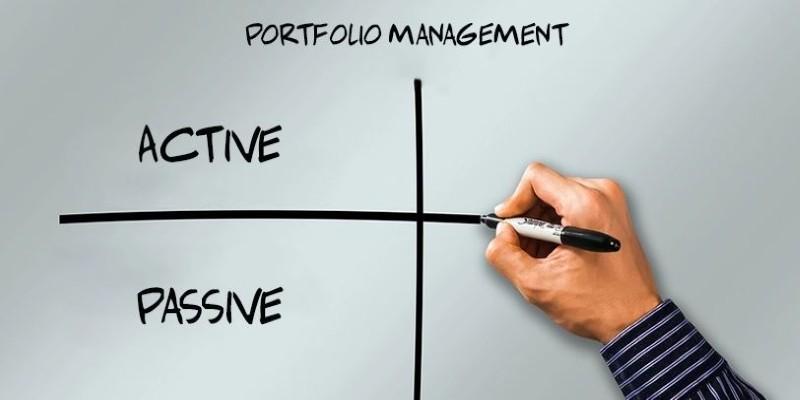
Active portfolio management involves frequently buying and selling investments to outperform the market. This strategy requires deep research, market knowledge, and constant monitoring. Professional fund managers use this approach to try to generate higher returns than market benchmarks. However, active investing comes with higher costs, as frequent trading can lead to fees and taxes that eat into profits.
On the other hand, passive portfolio management takes a long-term approach by investing in index funds or ETFs that track the market. This strategy focuses on steady growth rather than frequent buying and selling. Because it involves fewer transactions, passive investing tends to have lower costs and is more suitable for people who want a hands-off approach. While it may not offer quick gains, passive investing has historically provided strong returns over time with less risk.
Choosing between active and passive management depends on an investor’s goals, experience, and willingness to spend time analyzing markets. Some investors combine both strategies, actively managing a portion of their portfolio while keeping the rest in passive investments.
Conclusion
An investment portfolio is a key tool for building wealth and financial security. Whether you're a beginner or an experienced investor, understanding how to balance risk, diversify assets, and align investments with your goals is essential. Like a well-tended garden, a strong portfolio requires patience, regular adjustments, and a mix of different assets to thrive. Market fluctuations are inevitable, but a well-structured investment strategy can help you navigate them with confidence. Investing isn’t just about chasing returns—it’s about making smart, long-term decisions that support financial stability and growth. With the right approach, your portfolio can secure your future.